
Advancing Internationalization in Higher Education: Leadership, Governance, and Regional Perspectives from International Conference 2025
SEAMEO RETRAC, in collaboration with the Alberta Bureau for International Education (ABIE), the British Columbia Council for International Education (BCCIE), and the Canadian Bureau for International Education (CBIE), organized the International Conference 2025 on “Internationalization in Higher Education Leadership and Management: Perspectives, Innovations and Best Practices” on October 8–9, 2025.
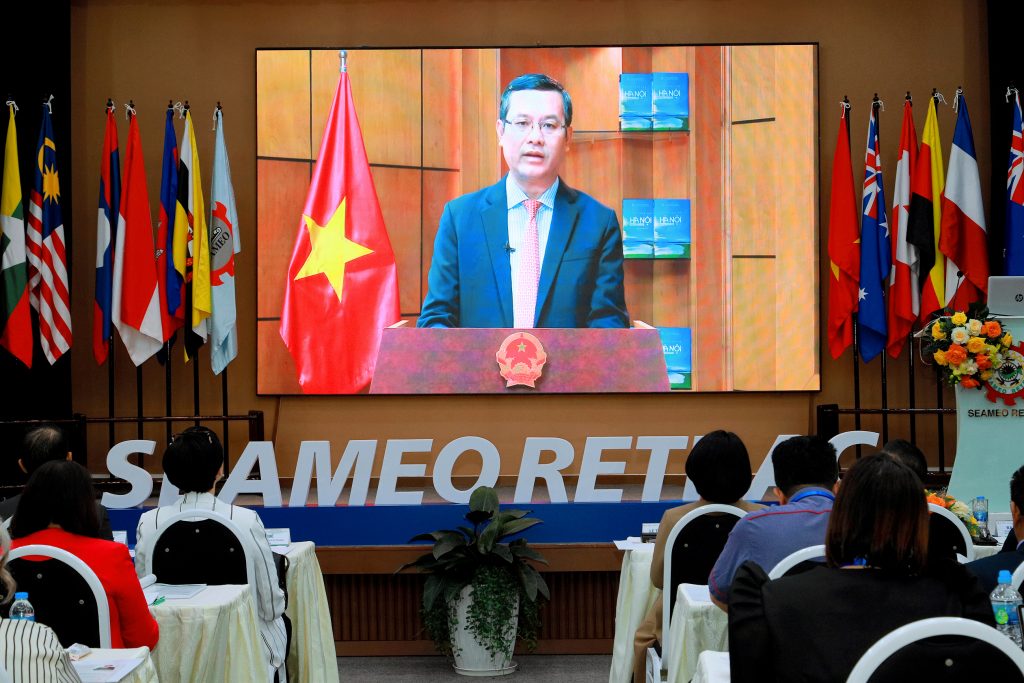
H.E. Assoc. Prof. Dr. Nguyen Van Phuc, Deputy Minister of Education and Training of Vietnam
“The conference comes at an important time, as Vietnam is carrying out major reforms in higher education to meet the needs of our country’s growth and development.” H.E. Assoc. Prof. Dr. Nguyen Van Phuc, Deputy Minister of Education and Training of Vietnam remarked at the Opening Ceremony. He stated that internationalization efforts have brought Vietnam positive results while facing important challenges. To address these opportunities and challenges, the Ministry is focusing on several main directions, including:
- Promoting greater university autonomy as the foundation for reform,
- Restructuring the higher education system to improve efficiency and reduce fragmentation,
- Modernizing education through digital transformation and new technologies, and
- Building governance models suited to Vietnam’s development and international integration.
The Conference highlighted how internationalization can support core functions of higher education institutions—teaching, research, governance, and societal engagement—within an increasingly interconnected and digital global context. Discussions focused on key areas including policy and leadership, quality assurance, emerging technologies, curriculum internationalization, teaching practices, and evolving research trends in higher education.
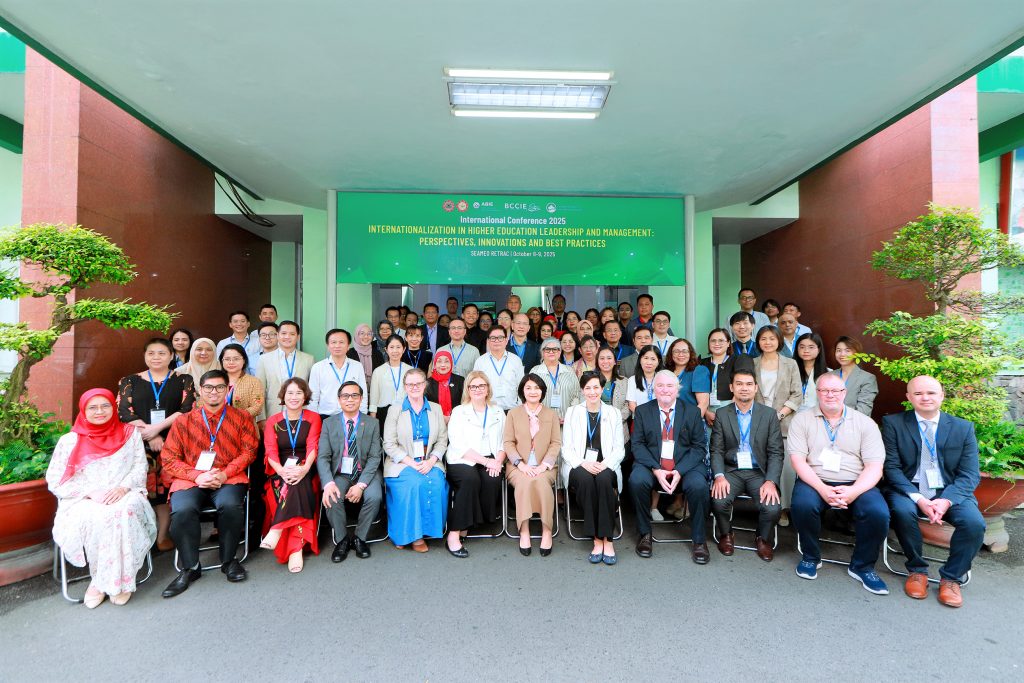
Approximately 80 senior leaders, policymakers, scholars, researchers, and practitioners from higher education institutions in Southeast Asia and beyond participated. Notably, the participation of the SEAMEO Secretariat and seven SEAMEO Regional Centres brought forward Southeast Asia’s practical experiences and perspectives in advancing internationalization, aligning priorities, and collaboratively addressing regional challenges in higher education.
Scholarly Perspective and Regional Insights
In his keynote speech, Mr. John Arnold Siena, Deputy Director for Programme and Development at the SEAMEO Secretariat, emphasized that internationalization should be aligned with institutional missions, regional priorities, and long-term capacity building to respond more effectively to local and regional development needs while addressing challenges such as policy gaps, funding limitations, and equitable access. He highlighted that SEAMEO initiatives—such as the SEA Teacher Program, and the Asian International Mobility for Students (AIMS)— play a key role in supporting these efforts by fostering institutional partnerships, faculty development, and regional integration.
He outlined three key strategies for Southeast Asian higher education institutions: (1) use internationalization as a tool to enhance institutional capacity rather than as an end goal; (2) leverage regional partnerships and consortia to promote knowledge exchange and collaborative problem-solving; and (3) develop globally competent graduates and future leaders prepared for a digitally connected and regionally integrated Southeast Asia.
Other keynote speakers from North America offered complementary perspectives on teaching innovation and workforce relevance in higher education. Dr. Tim Loreman, President & Vice-Chancellor of Concordia University of Edmonton, examined how growing student diversity, rapid technological change, and evolving expectations are reshaping post-secondary teaching, drawing on institutional experience in adapting pedagogy to better meet learner needs. From a governance and curriculum perspective, Dr. Nathalia Holtzman, Interim Provost at the College of Staten Island, CUNY, highlighted the integration of career readiness and AI tools into the student journey, illustrating how data-informed planning, embedded career pathways, and AI-supported advising can align academic learning with labor market demands and prepare graduates for a dynamic global workforce.
Comments are closed.